
Asere Homowo Festival
Paramount Chief - His Royal Majesty Nii Nikoi Olai Amashie III
About The Festival
The Homowo festival, which translates to “hooting at hunger,” is the most significant cultural celebration for the Ga people, and the Asere Traditional Council plays a central, authoritative role in its execution. The Asere people retain the exclusive obligation of performing the majority of the traditional rites that mark the Homowo festivities for the entire Ga State.
The Ga Native Calendar and Pre-Festival Bans
The timing of Homowo is dictated by the Ga Native Calendar, which is traditionally controlled by the priests of the Lamte Dsanwe lineage of the Asere Quarter. The festival cycle begins in April or May with Shibaa, the ceremonial sowing of Nmaa (millet), initiated by the Dantu priest.
Following the planting, a strict ban on drumming, singing, and noise-making—known as Koninfemo or gbemlilaa (“locking the way”)—is imposed for about a month. This period of silence ensures the crops grow without physical or spiritual distraction and is concluded by the beating of the sacred Odadaa drums.
The Pilgrimage to Okai Koi and Akpade Rites
Before the main day of the festival, the chiefs and high priests (wulomei) of Asere undertake a sacred pilgrimage to Okai Koi in Ofankor. Here, they perform ancestral rites in remembrance of King Okaikwei’s historical journey to Ayawaso and his sacrifices for the Ga people.
Additionally, the Friday preceding the main celebration features the Akpade rite, where red clay is smeared on the lintels and side doors of family houses to provide spiritual protection against evil forces.
The Main Celebration and Sprinkling of Kpekpele
The climax of the festival takes place on Saturday. The highlight is the preparation and communal sharing of Kpekpele (or Kpokpoi), a traditional dish made from steamed, fermented cornmeal served with palm nut soup and smoked fish.
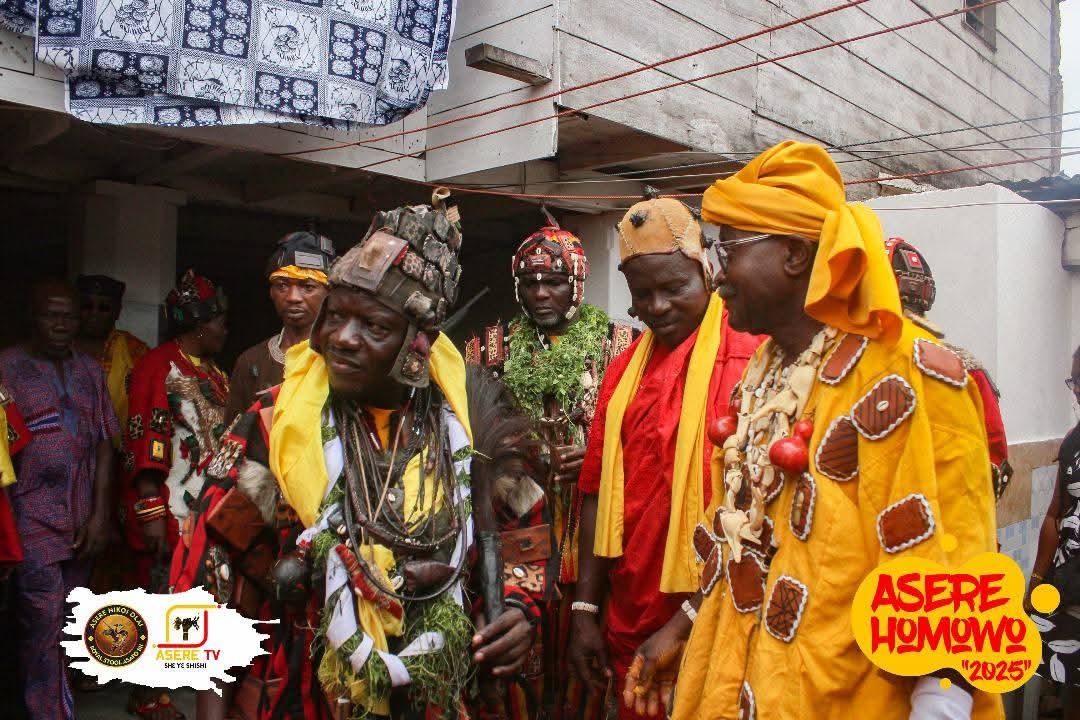
The Asere Mantse, His Royal Majesty Nii Nikoi Olai Amashie III, alongside his entourage, moves through the traditional territories to sprinkle the Kpekpele. This vital ritual is a symbolic offering of gratitude to the ancestors for a bountiful harvest and a declaration of triumph over famine.
A Platform for Unity and Peace
In the modern era, traditional leaders use the Homowo gatherings to foster social cohesion. The Asere Mantse and his sub-chiefs consistently leverage the festival to promote peace, urge family reconciliation, and advocate for unity and socio-economic development within the Ga-Dangme community.
ASERE NIKOI OLAI FAMILY
The Nikoi Olai family was part of nomadic race whose original abode was somewhere in the present-day Middle East between the Tigris River and the Euphrates rivers. As a result of persecution due to religious and cultural practices these hared people migrated through present day Israel, the Sanai and settled around Goshen in upper Egypt. Their leader was a man called Nikoi Olai.